2026-06-24
Hermes Agent vs OpenClaw: Choose the Recovery Boundary
Compare Hermes Agent and OpenClaw by mutation authority, execution placement, sessions, browser identity, durable skills, and evidence left after failure.

Hermes Agent and OpenClaw now overlap on most of the obvious checklist: persistent memory, messaging, skills, delegation, scheduled work, code execution, and browser access. The useful question is no longer which project has “agents.” It is where each project puts mutation authority, runtime state, and the evidence needed to recover a failed job.
The earlier version of this comparison treated the products as clean opposites: Hermes learned automatically while OpenClaw stayed manually controlled; Hermes needed an external browser while OpenClaw had one built in; only one side had meaningful session machinery. Current primary sources do not support those binaries. Hermes documents an optional approval queue for skill writes, a persisted session store, and browser routes. OpenClaw documents pluggable memory backends alongside its Markdown workspace. Both projects moved.
That convergence makes the decision more operational, not less. Hermes is attractive when one Python agent should own a compact learning-and-execution loop across several terminal backends. OpenClaw is attractive when an operator wants policy, session delegation, browser identity, paired devices, sandbox placement, and durable skill changes exposed as separate control surfaces. Neither arrangement is universally safer. The safer one is the arrangement your team can inspect after an interruption.
Failure modes reveal the recovery boundary
Imagine the same failure on both systems. A messaging-triggered agent edits a repository, delegates a test run, loses its process, and returns after restart. An operator needs to answer four questions: which conversation owned the job, which machine changed the files, which durable instructions changed during the run, and which approval is still pending.
Hermes tends to keep more of that story inside one agent distribution. Its gateway, session store, skills directory, memory, code-execution RPC, and selected terminal backend form a compact operating loop. The project documents local, Docker, SSH, Singularity, Modal, and Daytona terminal backends. That breadth matters when the same agent should move between a laptop, an HPC allocation, a remote host, and an idle-friendly cloud environment without changing its working style.
OpenClaw makes the operator trace several explicit boundaries. A session has an identity; delegated work gets another session; the sandbox decides where tools run; tool policy decides which tools exist; elevated execution is a separate escape hatch; browser profiles and paired nodes carry their own state. The extra surfaces can feel bureaucratic for a personal agent. They become useful when a team must explain why a job could read a file, why it could not call a tool, or which remote device accepted a command.

Durable behavior: automatic refinement is now a policy choice
Hermes still makes agent-managed skills a first-class form of procedural memory. Its documentation says the agent can create, update, and delete skills, including changes suggested by a background self-improvement review. The important qualification is one the old comparison missed: free writes are the default, but skills.write_approval can stage every create, edit, patch, or delete under a pending queue. Memory writes have a corresponding gate. An owner can therefore choose rapid autonomous refinement or reviewed refinement; “Hermes always rewrites itself without review” is no longer accurate.
The trade-off remains real. With the gate off, a useful procedure can become durable behavior with little friction, but the live skill directory is also the audit boundary. With the gate on, learning waits for an operator and the product gives up part of its immediacy. A serious pilot should exercise both settings. Do not infer the write policy from a marketing description—read the actual profile configuration.
OpenClaw’s Skill Workshop uses a proposal queue as the normal agent-authored route. The agent drafts a durable change; an operator inspects and applies it. Skills can come from workspace, project-agent, personal-agent, managed, bundled, plugin, or extra-directory roots, with documented precedence. That is slower than a free write and easier to review. It also means a migration or incident review must record which root supplied a skill, not merely its name.
Execution: choose the placement model you can debug
Hermes has the clearer single setting when execution placement is the main problem. Pick a terminal backend and let the agent work there. Its execute_code tool adds another useful boundary: a child Python process calls an allowlisted subset of Hermes tools over a Unix-domain-socket RPC, while only the script’s printed result returns to the model context. The documented defaults include a five-minute timeout, a 50 KB stdout ceiling, and 50 tool calls. That is a practical shape for bulk filtering and deterministic loops, provided the missing intermediate transcript is acceptable.
OpenClaw separates placement from permission. Host versus sandbox answers where an action runs. Tool allow/deny policy answers whether the action is available. Elevated execution applies only to exec and does not restore a denied tool. Paired nodes add a third kind of destination: a device can expose approved commands or capabilities without becoming an undifferentiated shell host. The split is more configuration to understand, but it prevents a common category error—treating “inside a container” as equivalent to “has a safe tool set.”
| Operator question | Hermes Agent | OpenClaw |
|---|---|---|
| Where does a command run? | Selected terminal backend | Host, sandbox backend, or paired node target |
| What blocks the command? | Approval, backend isolation, tool limits, and profile policy | Tool policy, sandbox policy, approval, and elevated-exec gates |
| How does learned procedure become live? | Direct skill write by default; optional staged approval | Workshop proposal inspected and applied |
| How is delegated work observed? | Subagents plus gateway session persistence; Python RPC can compress tool loops | Named child sessions, isolated or forked context, status and history tools |
| What deserves a recovery drill? | Backend workspace, session resume, pending skill or memory writes | Parent/child sessions, workspace changes, pending proposals, sandbox or node state |
Memory and sessions no longer decide this by themselves
Both products now have enough memory and session machinery that a one-line “winner” hides the configuration that matters. Hermes combines persistent memory, session search, optional external memory providers, user modeling, and background review. Its gateway session store persists metadata and documents restart recovery for interrupted conversations. OpenClaw keeps human-readable Markdown as the durable source of truth for its built-in memory path, while also documenting selectable backends. Its session tools expose child creation, history, status, follow-up work, and context isolation.
The more revealing question is who may turn an observation into policy. In Hermes, memory and skill writes can participate directly in the learning loop, subject to the owner’s approval settings. In OpenClaw, workspace instructions are readable files and agent-authored skill changes normally cross the Workshop boundary. If your incident process starts with a Git diff and a pending-proposal list, OpenClaw fits that habit. If it starts with one agent home, one profile, and a review of what the agent learned, Hermes fits more naturally.
Browser access exists on both sides; identity ownership differs
“Hermes requires Playwright MCP while OpenClaw includes a browser” is another expired comparison. Hermes documents cloud browser access through its Tool Gateway and includes computer-use paths in the current repository. OpenClaw documents a managed browser service with isolated profiles and an optional connection to an existing user Chrome profile. Those are different operating choices, not a yes/no feature gap.
For a web workflow, record where cookies live, who owns the profile, whether a human can take over, how downloads cross the execution boundary, and what happens when the browser process dies mid-form. A cloud browser can reduce workstation coupling. A locally managed profile can make debugging and authenticated handoff easier. Either can be dangerous if the agent receives a broad logged-in identity with no action-level approval.
OpenClaw’s paired-node system remains a genuine architectural distinction when the workflow reaches cameras, screens, location, notifications, or device commands. Hermes’s six terminal backends are the counterweight when the important targets are servers, containers, HPC, and serverless environments. Count the destinations in your workflow, not the logos on a feature page.
Testing the recovery boundary
Use one workflow with an inconvenient failure path: a message reports a failing repository check; the agent inspects the code, prepares a patch, delegates tests, asks before any push, and resumes after its control process is restarted. Keep the model, repository, and acceptance tests the same. Start from clean profiles and do not import production credentials.
Score the run on evidence an operator can recover, not on whether the first answer sounds polished:
- Can you identify the conversation and every delegated child that touched the task?
- Can you prove which machine or isolation boundary ran each command?
- Can you distinguish a denied tool from a sandbox-placement failure?
- Did any memory or skill change become durable, and was that change reviewed?
- After restart, does the agent resume the same job without repeating an external mutation?
- Can a second operator reconstruct the run without reading an opaque model transcript end to end?
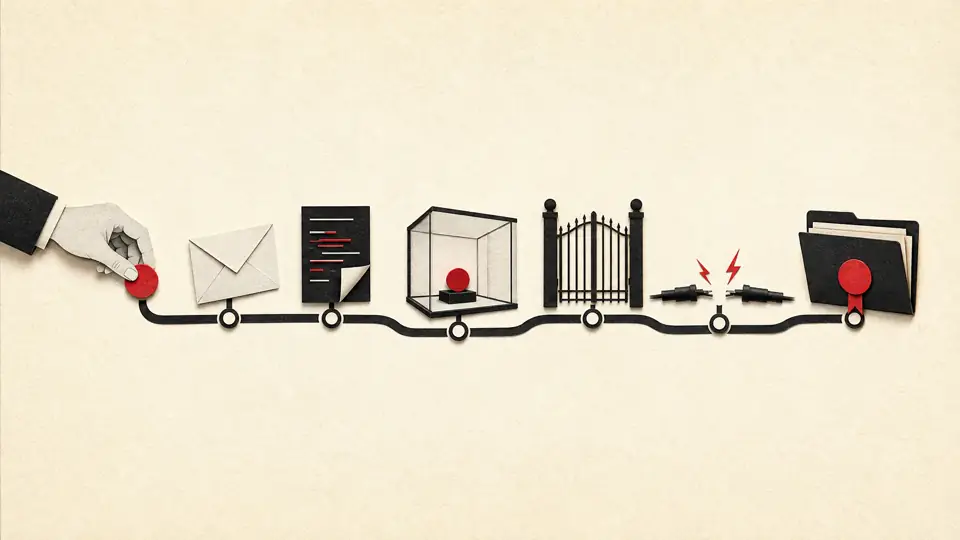
Hermes will often feel better when the operator values a compact loop, autonomous refinement, Python-native bulk orchestration, or a terminal backend outside the usual host/container pair. OpenClaw will often feel better when the operator values visible session ownership, layered policy, a managed local browser identity, paired devices, or mandatory review before agent-authored skill changes become live. If the pilot produces the opposite result, trust the recovery evidence rather than this generalization.
Migration is an experiment, not a verdict
Hermes provides an explicit hermes claw migrate command with --dry-run and a user-data preset. That lowers the cost of testing it with an existing OpenClaw workspace. It does not prove equivalence between memory rules, skill precedence, channel routing, approvals, or browser identity. Begin with the dry run, migrate non-secret user data into a separate Hermes profile, inspect every imported skill, and configure credentials independently. Keep the original OpenClaw workspace unchanged until the failure drill passes.
Running both products permanently is possible, but sharing one bot token, one writable checkout, or one browser profile turns the comparison into a race. Give each control plane a separate channel identity and working tree. If they must hand work to each other, make the handoff an explicit file, issue, or queue item with an idempotency key.
Recommendation
Choose Hermes Agent when you want the agent home, learning loop, and execution backend to behave as one compact system—and you are prepared to set and audit its write-approval policy. Choose OpenClaw when you want durable behavior, session ownership, execution placement, tool availability, browser identity, and device access to remain separately inspectable—even at the cost of more configuration.
The comparison should end where operations begin: stop counting overlapping capabilities, force one failure, and inspect the state left behind. The platform whose recovery story your second operator can explain is the better choice for that workflow.
Sources and audit boundary
- Hermes Agent repository at the audited commit
- Hermes skills and write-approval documentation
- Hermes code-execution contract
- Hermes migration guide
- OpenClaw skills and Skill Workshop
- OpenClaw session delegation
- OpenClaw execution-policy boundaries
- OpenClaw managed browser
- OpenClaw paired nodes