2026-06-17
OpenClaw vs Claude Code: Choose the Lifecycle Owner, Not the Feature List
A 48-case routing drill replaces the outdated feature contest with a lifecycle decision for repository work, Gateway work, and tested composition.

The useful OpenClaw vs Claude Code comparison no longer fits in a feature checklist. Claude Code is not merely a terminal assistant. Its current documentation covers terminal, IDE, desktop, and web surfaces; background and scheduled work; MCP; hooks; subagents; headless execution; and an Agent SDK. OpenClaw is not merely a wrapper around another coding agent. Its Gateway owns channel connections, session routing, cron and webhook ingress, device nodes, tool policy, and outbound delivery.
That overlap makes the familiar “which tool has more features?” question actively misleading. A production workflow needs one runtime to own each uncertain boundary: who accepts the request, which session it belongs to, what may execute, how a restart is recovered, where the result is delivered, and what a retry is allowed to repeat. Choose that lifecycle owner first. Choose the coding engine second.
Ownership is the product decision.
We checked the current host before revising this article. It has OpenClaw 2026.7.1-2. It does not have a claude executable. We also ran a deterministic 48-case routing fixture, with no model call, repository write, network mutation, credential, or customer data. All 48 cases matched their declared outcomes: 26 were ready, four were held, and 18 were blocked. This is a boundary test, not a benchmark of either product.
The old comparison failed at the lifecycle boundary
The previous version described Claude Code as a focused terminal specialist and OpenClaw as the always-on outer runtime. That distinction once sounded tidy. It is now too coarse to operate.
That framing now leaks.
Claude Code can be invoked interactively, from an IDE, through desktop and web experiences, or non-interactively with claude -p. The official overview also describes web work that can run while the user is away, desktop scheduled tasks, custom subagents, hooks, MCP connections, and the Agent SDK. Those are runtime capabilities, not just autocomplete features.
OpenClaw, meanwhile, documents a long-lived Gateway that owns messaging surfaces and a typed WebSocket API. The Gateway routes incoming work into sessions, persists scheduled jobs, exposes typed tools, connects nodes, and sends events to clients. It has a specific failure model: events are not replayed automatically, side-effecting methods use idempotency keys, and one Gateway should own a host’s session state. Those are not properties of a generic shell command.
Both products can therefore touch code, tools, remote services, and asynchronous work. The distinction that survives is ownership. If a Telegram message arrives at 03:00, a job restarts, a permission rule changes, or a result must go back to the originating channel, which runtime is authoritative for that transition?
Testing a routing contract, not staging a bake-off
The 48-case fixture reduced the comparison to a routing decision. Each packet declared an ingress, execution unit, required runtime, repository binding, permission evidence, adapter version, delivery destination, timeout, cancellation behavior, and replay key. The function then returned one of 14 distinct outcomes.
Direct Claude Code cases were admitted only when the task was repository-scoped, the Claude runtime was declared available, the worktree and revision were bound, and the permission evidence matched the requested tools. Direct OpenClaw cases were admitted when Gateway-owned ingress or delivery mattered and the OpenClaw tool policy covered the requested operation. Generic local analysis could remain local. A composed handoff required both runtimes plus an adapter contract.
The host probe changed that last result. Because claude is absent here, every proposed OpenClaw-to-Claude Code handoff is HOLD_MISSING_RUNTIME, even if the architecture sounds sensible. The fixture does not download Claude Code, invent an adapter, or claim a successful integration. That refusal is more useful than a diagram that silently assumes the executable exists.
No executable, no handoff.
| Question | Claude Code owns it when… | OpenClaw owns it when… | Composition adds |
|---|---|---|---|
| Ingress | The developer starts a coding session from terminal, IDE, desktop, web, or CI | A channel, webhook, cron job, or Gateway client creates the work | A signed request envelope between runtimes |
| Execution unit | One repository, worktree, patch, test run, or code review | One routed session that may span messages, tools, nodes, and delivery | An exact repo revision and bounded coding task |
| Permissions | Claude Code allow, ask, deny, mode, hook, and tool rules | OpenClaw tool policy, session policy, pairing, and Gateway authorization | Both policies; neither may be weakened by the adapter |
| Recovery | The coding invocation or Agent SDK caller owns resume and process cleanup | The Gateway owns session state, cron runs, and delivery state | A shared attempt ledger and reconciliation rule |
| Result | A patch, commit, review, test report, or structured response | A channel reply, webhook result, scheduled report, or device action | A schema that separates execution evidence from delivery receipt |
The fixture produced 26 ready decisions, four holds, and 18 blocks. Those counts are not quality scores. They show that a routing policy can reject a plausible task before it reaches an unavailable runtime, unbound repository, missing permission, ambiguous delivery target, or unsafe replay path.
The blocked cases are the useful ones.
The repository lane belongs naturally to Claude Code

Claude Code’s strongest direct lane begins with a repository. It can inspect a codebase, edit files, run commands, work with Git, use configured MCP servers, and delegate to subagents. The headless interface supports non-interactive execution and structured output. The Agent SDK exposes the same agent loop to an application rather than forcing an operator to scrape a terminal.
Its permission system is also concrete. Rules can allow, ask, or deny tool use, with deny taking precedence, followed by ask and allow. Permission modes change interaction behavior, and managed settings can constrain what a local project is allowed to override. Hooks add deterministic checks at lifecycle points; the documentation shows protected-file patterns that reject an edit independently of the model’s judgment.
That makes Claude Code a reasonable direct owner when the request is “repair this test in this revision,” “review this pull request,” or “produce a patch and test evidence from this worktree.” The caller still needs to bind the repository, revision, allowed tools, network policy, output schema, timeout, and cleanup. “Run Claude on the repo” is not a complete production contract.
Repository ownership has limits.
Desktop schedules and web background agents do not invalidate this lane. They widen the surfaces from which a repository job can start. The durable question remains whether the coding environment itself should own the job’s identity and completion, or whether it is serving a larger routed workflow.
The Gateway lane belongs naturally to OpenClaw
OpenClaw’s direct lane begins outside the repository. A message arrives from Telegram or another channel. A webhook carries an event. A persisted cron job wakes on a schedule. A paired node exposes a device capability. The Gateway determines the session key, applies policy, dispatches tools or an agent turn, and delivers the result.
That session ownership matters when the human conversation is part of the state. OpenClaw separates direct messages, groups, cron jobs, and webhooks according to routing rules. The Gateway owns the session store and maintenance. A coding process launched somewhere inside that session should not quietly become the authority for channel identity or delivery.
The Gateway should keep that authority.
Cron illustrates the difference. OpenClaw’s scheduler is persisted by the Gateway and records runs; an isolated job can receive its own agent turn, timeout, and delivery mode. A shell-level schedule could launch a coding command, but it would not automatically inherit the Gateway’s session routing or its originating destination. Conversely, using OpenClaw merely to wrap an interactive repository repair adds a boundary that may not buy anything.
The same caution applies to tools. OpenClaw exposes typed tools with policy controls. A child coding runtime cannot treat those capabilities as an ambient toolbox. If a repo task needs a channel send, browser action, or device call, the request must cross back through the Gateway under the Gateway’s policy and audit trail.
The feature-overlap trap
MCP is not a deciding feature by itself. Claude Code supports local and remote MCP servers and requires trust decisions for configured servers. OpenClaw also exposes MCP-compatible capabilities and typed tool surfaces. An MCP connection tells you how a tool is described and invoked; it does not decide who owns the user identity, repository revision, retry ledger, or final delivery.
Channels are not decisive either. Claude Code’s MCP documentation includes channels that can push events into a running session. OpenClaw natively connects messaging surfaces through its Gateway. These can look similar from a demo. Operationally, one may be an event source attached to a coding session while the other is the primary identity and routing plane. Write down which one is authoritative.
Scheduling has the same ambiguity. Claude Code desktop can schedule recurring tasks; OpenClaw persists cron jobs. Two schedulers aimed at the same repository create duplicate ownership unless one is clearly upstream. A recurring code-maintenance task may belong directly to Claude Code. A multi-channel workflow that happens to include a code patch may belong to OpenClaw. Do not enable both and hope idempotency appears later.
Overlap is not ownership.
A composed handoff is an adapter, not a prompt
The tempting architecture is OpenClaw outside and Claude Code inside: OpenClaw receives the request, Claude Code changes the repository, OpenClaw returns the result. It can be a good design. It is not created by putting claude -p in a tool definition.
The shell command is the easy part.
A production adapter needs a version and a narrow request schema. At minimum, bind:
- the repository identity, worktree path, and exact revision or source digest;
- the task text or normalized instruction digest;
- the Claude Code version, adapter version, model policy, and allowed tools;
- the permission mode, MCP servers, hooks, network boundary, and secret references;
- the expected output schema, required tests, patch or commit policy, and evidence files;
- the timeout, cancellation semantics, process cleanup, replay key, and attempt number;
- the OpenClaw session and delivery destination that will receive the reconciled result.
{
  "adapterVersion": "…",
  "worktree": {"repo": "…", "revision": "…", "sourceDigest": "…"},
  "execution": {"runtime": "claude-code", "allowedTools": ["…"], "timeoutMs": 900000},
  "evidence": {"requiredChecks": ["…"], "resultSchema": "…"},
  "recovery": {"attemptKey": "…", "cancelPolicy": "…", "replayPolicy": "reconcile"},
  "delivery": {"openclawSession": "…", "destination": "…"}
}
The ellipses are deliberate. This host does not have Claude Code installed, so we did not invent a command path, configuration layout, or successful result. The composed lane stays on hold until the runtime exists and the adapter is tested against a disposable repository.
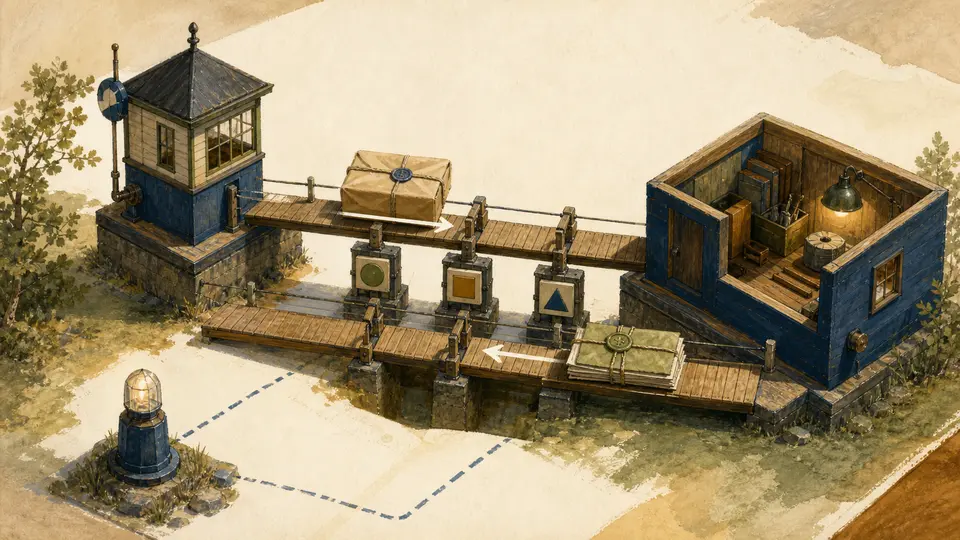
Failure modes decide the architecture
Consider a timeout after Claude Code created a patch but before OpenClaw received the result. Retrying blindly may produce a second branch, repeat a migration, or run a destructive test twice. Marking the job failed may discard a valid change. The adapter needs an attempt ledger that can inspect the bound worktree and recover the terminal evidence before another execution begins.
Cancellation is not just killing a process. Claude Code’s headless guidance discusses process cleanup for long-running sessions. OpenClaw may also have a session, cron run, or delivery attempt still in flight. A cancel receipt should distinguish “request accepted,” “coding process stopped,” “worktree reconciled,” and “delivery suppressed.” One green status cannot honestly represent all four.
Permission drift is another split-brain risk. A Claude Code allow rule cannot authorize an OpenClaw channel send. An OpenClaw tool policy cannot silently grant Claude Code permission to edit protected paths. Each runtime enforces its own boundary. The adapter may request the intersection, but it must never translate a broad upstream approval into broader downstream access.
Delivery can fail after execution succeeds. The patch and tests belong in durable evidence storage before a Telegram reply or webhook callback is attempted. OpenClaw can then retry delivery without rerunning the coding job. If the downstream system needs exactly-once semantics, store its receipt separately from the execution receipt.
The retry boundary exposes the architecture.
Validation for the first composed run
Start with a disposable repository and a task whose expected diff is known. Pin both runtimes. Deny network access unless the case requires it. Require structured output plus a patch digest, changed-file list, test commands, exit codes, and final worktree status. Interrupt one attempt during editing and another after tests. Verify that recovery distinguishes no change, partial change, completed change, and completed-but-undelivered result.
Then test the negative space: wrong revision, dirty worktree, missing executable, forbidden tool, changed adapter version, expired approval, malformed output, ambiguous timeout, duplicate attempt key, and a delivery destination that no longer exists. The desired result is not clever recovery in every case. Most of these should stop before code execution.
Only after those cases pass should a real repository enter the composed lane. Even then, begin with read-only review or a patch in a disposable worktree. Production credentials, release commands, and direct pushes deserve separate policy gates.
What the 48 cases do not prove
The fixture proves that one local decision function returned its declared outcome for 48 synthetic packets. It does not measure coding quality, latency, token use, cost, model behavior, channel reliability, or developer preference. It did not install or execute Claude Code. It did not invoke an OpenClaw agent, change a repository, call a model, use a credential, or send a message.
Official documentation establishes the supported surfaces and policy mechanisms described here. It does not establish that every organization should choose the same owner. A team centered on Claude Code desktop schedules may reasonably keep more lifecycle state there. A service already built around OpenClaw channels, sessions, cron, and device nodes may keep the Gateway outside. The decision depends on the boundary that must survive a restart.
The revised decision
Choose Claude Code directly for repository-native work when its session can own the invocation, worktree, permissions, evidence, and result. Choose OpenClaw directly for Gateway-native work when channel identity, routed sessions, persistent scheduling, webhooks, nodes, model-provider routing, or cross-channel delivery define the job.
If both are needed, refuse the vague middle. Install and pin the downstream runtime. Build a versioned adapter. Bind the repository and request. Keep the two permission systems intact. Separate execution, reconciliation, and delivery receipts. Test interruption before trusting success.
That is less satisfying than declaring a winner. It is also the comparison that remains true after both products add another surface next month.
What changed from the old article
The old article presented a clean terminal-versus-runtime split, a generic comparison table, setup steps, a combined pattern, and a winner-style FAQ. It treated several capabilities as exclusive that now overlap or were already broader than stated. It also implied that composition was straightforward without retaining a tested adapter or host probe.
This replacement corrects those claims. It uses current official documentation, reports the actual host state, separates direct ownership from composition, and adds a deterministic 48-case routing fixture. No live Claude Code run or product benchmark is claimed. The recommendation is now conditional on lifecycle ownership and evidence, not on a feature count.